
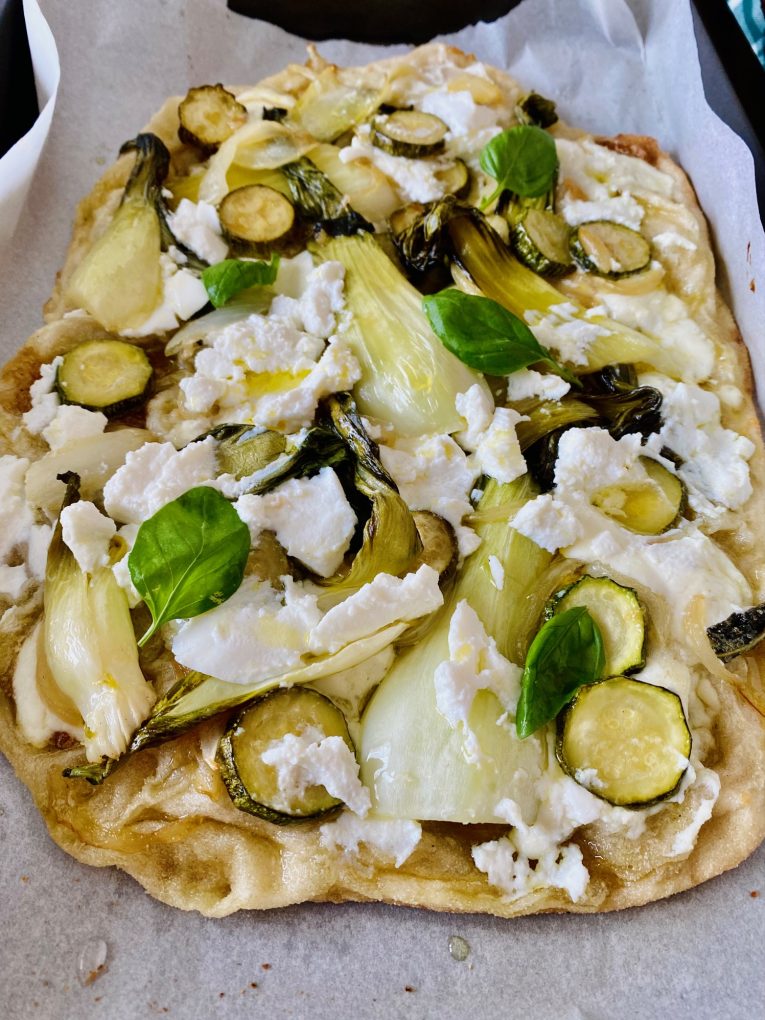
Pinsa Romana is often described as a Roman-style pizza, but it’s slightly different in both dough, texture and shape. The name comes from the Latin “pinsere”, meaning to stretch or press, which reflects how the dough is handled.
It’s made with a blend of flours and a high-hydration dough, resulting in a lighter, more open and more digestible base. In Rome and throughout Italy, Pinsa has become increasingly popular, commonly found in bakeries and pinserie, usually served in its characteristic oval shape.
Serves: 2 Pinsa bases, Prep time: 20 minutes, Resting: 72 hours (fridge), Cook time: 10–15 minutes
Ingredients
- 350 g strong wheat flour, type “0” (about W300–320) (2 3/4 cups)
- 70 g rice flour (1/2 cup)
- 30 g soy flour (1/4 cup)
- 350 ml cold water (1 1/2 cups)
- 2 g active dry yeast (1/2 teaspoon)
- 9 g fine salt (1 1/2 teaspoons)
- 1 tablespoon olive oil
Optional (but recommended if you have it):
- 5 g dried wheat sourdough (1 teaspoon)
For the topping (flexible):
- 2 medium courgettes, sliced (zucchini)
- 1 small onion, thinly sliced
- 1 small Bok Choy
- A handful of fresh basil
- 60–80 g cream cheese (4–5 tablespoons)
- Extra Virgin Olive oil- EVOO, to taste
- Salt, to taste
Method
-
In a large bowl, combine the flours and yeast. Add the cold water gradually and mix until a rough, hydrated dough forms. It will look uneven and quite wet at this stage — that’s expected.
Tip: the strong wheat flour is essential here — with a 72-hour fermentation, the gluten needs enough strength to hold structure over time.
-
Add the salt, then the olive oil, and mix just until incorporated. Let the dough rest for 20–30 minutes, then give it a few gentle stretch-and-folds directly in the bowl.
💡 Tip: if too sticky, wet your hands instead of adding flour — it keeps the dough balanced.
- Repeat the stretch-and-folds 2–3 times over the next couple of hours, letting the dough relax in between. It should gradually become smoother and more cohesive.
-
Cover and transfer to the fridge for 72 hours. This is where the dough develops flavour, lightness, and digestibility.
💡 Tip: keep the temperature stable and resist the urge to keep checking on it.
-
After 72 hours, let the dough sit at room temperature for about 1 hour. Turn it onto a floured surface, divide in two, and gently stretch into shape. Don’t force it, just follow the dough.
💡 Tip: if it shrinks back, let it rest 10 minutes and continue.
A Simple Homemade Topping
Cook the courgettes, onion and bok choy in a pan with olive oil and a pinch of salt until soft and lightly coloured. Add the basil at the end to keep it fresh.
Spread a thin layer of cream cheese over the dough, add the vegetables, and finish with a drizzle of olive oil.
Bake in a very hot oven for 10–15 minutes, until golden and lightly crisp.
Serve Pinsa Romana immediately — warm, airy, and crisp. Not perfect, just properly homemade.
Notes, Storage and Variations
A few extra notes if you’re planning ahead or adapting the recipe.
💡 The dough can be frozen after the 72-hour fermentation. Divide it into portions, lightly oil, and freeze in airtight containers for up to 1 month.
Thaw it slowly in the fridge, then let it come back to room temperature before shaping. The structure may be slightly less airy, but still very good.
💡 While I kept the topping simple here, Pinsa Romana works just as well with more classic options — margherita, marinara, or anything you’d normally use for classic pizza. The base is light enough to handle both minimal and richer toppings.
 (4 votes, average: 5.00 out of 5)
 Loading...
Leave a Reply